

Development history of interactive whiteboard
Jan 23, 2025
Leave a message
Introduction

Interactive whiteboard (IWB) is an important tool for modern education, corporate meetings, presentations, and collaboration. It combines the writing function of traditional whiteboards with the interactive function of computer technology. It can interact in real time through touch, handwriting, and multimedia presentation, greatly improving the efficiency of teaching and work. However, the birth and development of interactive whiteboards did not happen overnight, but has undergone a long period of technological innovation and progress. From the original traditional whiteboard to the modern smart whiteboard, interactive whiteboards have gone through multiple stages of evolution.
This article will introduce the development history of interactive whiteboards in detail, from its origin, technological progress, popularization and application to today's multi-functional intelligent whiteboards, and comprehensively explore the development of interactive whiteboards.
1.The origin of interactive whiteboards
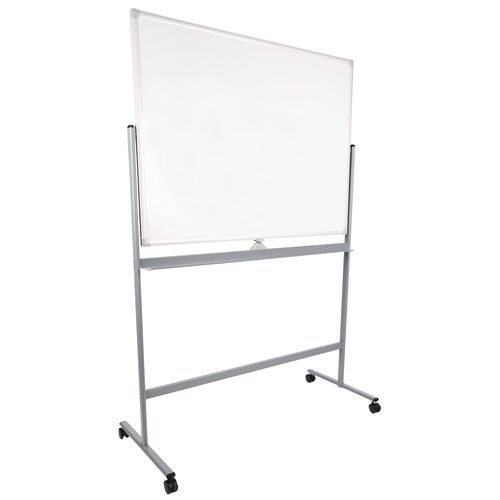
Early whiteboards and blackboards
The origin of interactive whiteboards is closely related to traditional whiteboards and blackboards. Whiteboards and blackboards are the earliest display tools used in schools, offices, and other places. From the late 19th century to the early 20th century, blackboards became the main tool for school teaching, and teachers conveyed knowledge by writing content on the blackboard. With the development of technology, blackboards were gradually replaced by whiteboards, which were more popular because they could be written with markers and were not easy to produce dust. Although these traditional whiteboards and blackboards have certain interactive functions (teachers can interact with students by writing), they are only display and recording tools and lack higher-level interactivity. With the development of computer technology, education and work environments began to require more efficient display and collaboration tools, which laid the foundation for the birth of interactive whiteboards.
Introduction of computer technology
The popularization of computer technology, especially the emergence of graphical user interfaces (GUIs), made the invention of interactive whiteboards possible. In the 1980s, the gradual maturity of computer display and touch screen technology made digital teaching and collaboration a reality. As the performance of computer hardware continued to improve, more interactive functions were introduced into the field of education, stimulating the demand for tools that can display multimedia on large screens and allow real-time interaction.

2.The birth and early development of interactive whiteboards
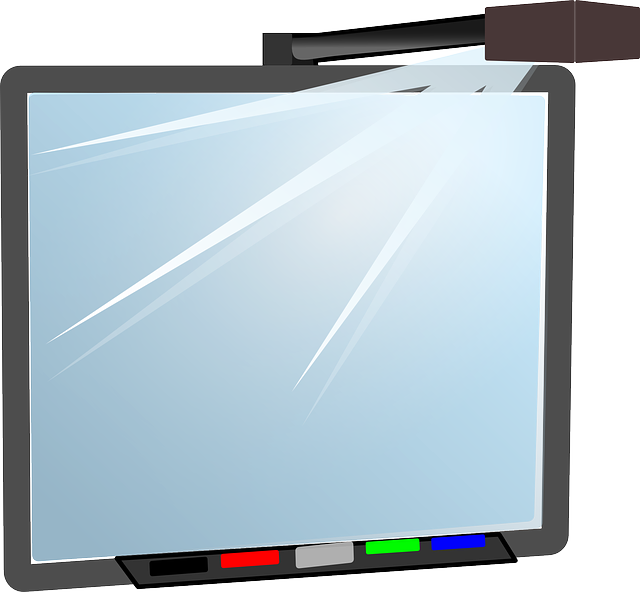
The emergence of the first generation of interactive whiteboards
The real birth of interactive whiteboards can be traced back to the 1990s. In 1991, Smart Technologies, an Australian company, launched the first interactive whiteboard product. The launch of this product marks the official birth of the interactive whiteboard, which combines computers, projection technology, touch technology and traditional whiteboards, allowing teachers and students to write, draw and interact directly on the whiteboard. This whiteboard can not only display the content in the computer, but also input, modify or annotate on its surface through touch or special pen. At that time, the popularity of interactive whiteboards was still limited by factors such as expensive equipment and immature technology. However, with the increasing demand for technological teaching tools in the education market, interactive whiteboards have gradually been recognized.
Continuous improvement of technology
In the early stage, the technical development of interactive whiteboards was relatively slow. It mainly depends on the connection between the projector and the computer. The projector projects the content in the computer onto the whiteboard, and the user operates it through touch or pen. Although this method realizes the interactive function, due to the technical limitations of the projector such as brightness and resolution, the display effect and user experience are not ideal. At this time, the popularity of interactive whiteboards mainly depends on the promotion of education departments and some scientific research institutions, especially in Europe and the United States. The demand of the education market has promoted the development of related technologies. In the mid-1990s, with the continuous advancement of projector and computer technology, the application of interactive whiteboards gradually expanded to the global scope.

3.Popularization and commercialization of interactive whiteboards
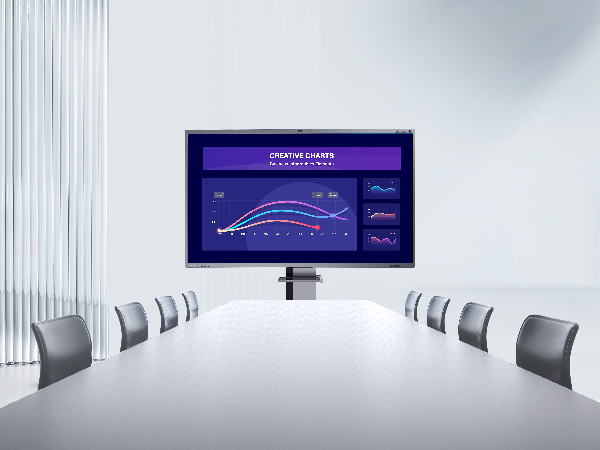
Advances in projection technology
After entering the 21st century, with the rapid advancement of projector technology, the display effect of interactive whiteboards has been greatly improved. The brightness and resolution of modern projectors have been greatly improved, making the display effect of interactive whiteboards clearer and brighter. With the support of this technology, interactive whiteboards have gradually gotten rid of the limitations of traditional equipment and become an important tool for education, enterprises and public places. At the same time, the use of interactive whiteboards has also begun to diversify. Initially, interactive whiteboards were limited to the field of teaching, but as the technology matured, more and more enterprises, government agencies and other industries began to adopt interactive whiteboards. They are not only used for classroom teaching, but also widely used in corporate meetings, demonstrations, collaboration and public displays, becoming an important part of information and intelligent office.
Development of software technology
With the continuous advancement of hardware technology, the software technology of interactive whiteboards has also been continuously improved. Many software companies have developed applications designed specifically for interactive whiteboards, allowing users to draw, record, display and collaborate on whiteboards. These software not only provide a wealth of drawing tools, but also support multimedia functions such as audio and video playback, image processing, web browsing, etc., which greatly enhances the functionality of interactive whiteboards.

4.Global application
With the continuous maturity and popularization of interactive whiteboard technology, more and more countries and regions have begun to realize its importance in education and business, especially in Europe, America, Asia and Australia, where the application of interactive whiteboards has achieved rapid development. Governments of various countries have begun to vigorously promote information-based education, especially in the field of basic education, and interactive whiteboards have gradually become standard equipment for many schools and educational institutions. Especially in emerging markets such as China and India, with the increasing demand for modern teaching tools in the education field, the scale of the interactive whiteboard market is also expanding. At the same time, multinational companies and educational technology companies around the world have entered this market, promoting the global application of interactive whiteboards.
5. Innovation and development of modern interactive whiteboards

Breakthrough in touch technology
With the continuous breakthrough in touch screen technology, modern interactive whiteboards are no longer dependent solely on external devices (such as mouse, keyboard or stylus), but are operated by directly touching the screen. Today's interactive whiteboards generally use capacitive touch technology or infrared touch technology, making touch operations more sensitive and precise. This innovation means that users no longer need to rely on external input devices (such as stylus) and can directly operate with their fingers, which greatly facilitates teaching, display and collaboration. The advancement of touch technology not only improves the user experience of interactive whiteboards, but also further lowers its operating threshold, making it easy for ordinary users to get started.
Application of wireless technology
In recent years, the widespread application of wireless technology has also brought revolutionary changes to the development of interactive whiteboards. Many modern interactive whiteboards support wireless connection functions, allowing users to transfer content from computers, tablets or mobile phones to whiteboards through wireless networks for real-time display and interaction. This wireless design makes the deployment of interactive whiteboards in classrooms, conference rooms and other environments more flexible, and users can operate and display more freely. In addition, the application of cloud computing and big data technology also enables interactive whiteboards to achieve more cloud collaboration and data storage functions. Users can share resources, collaborate in real time and store content through cloud platforms, making interactive whiteboards not only a simple display tool, but also an intelligent device that integrates information management, knowledge sharing and collaborative communication.


Integration of intelligence and AI technology
After entering the era of artificial intelligence (AI), interactive whiteboards began to integrate intelligent technology. Through artificial intelligence algorithms, modern interactive whiteboards can automatically recognize handwritten text, images, voice and other content, providing a more accurate and efficient interactive experience. For example, some smart interactive whiteboards can automatically generate relevant learning resources, demonstration content and data analysis based on user input, helping users improve efficiency and work quality.